DAS & Associates

Leadership & Transformation

Schedule a Conversation

Black History Month: Leading with Purpose in a Disruptive Era

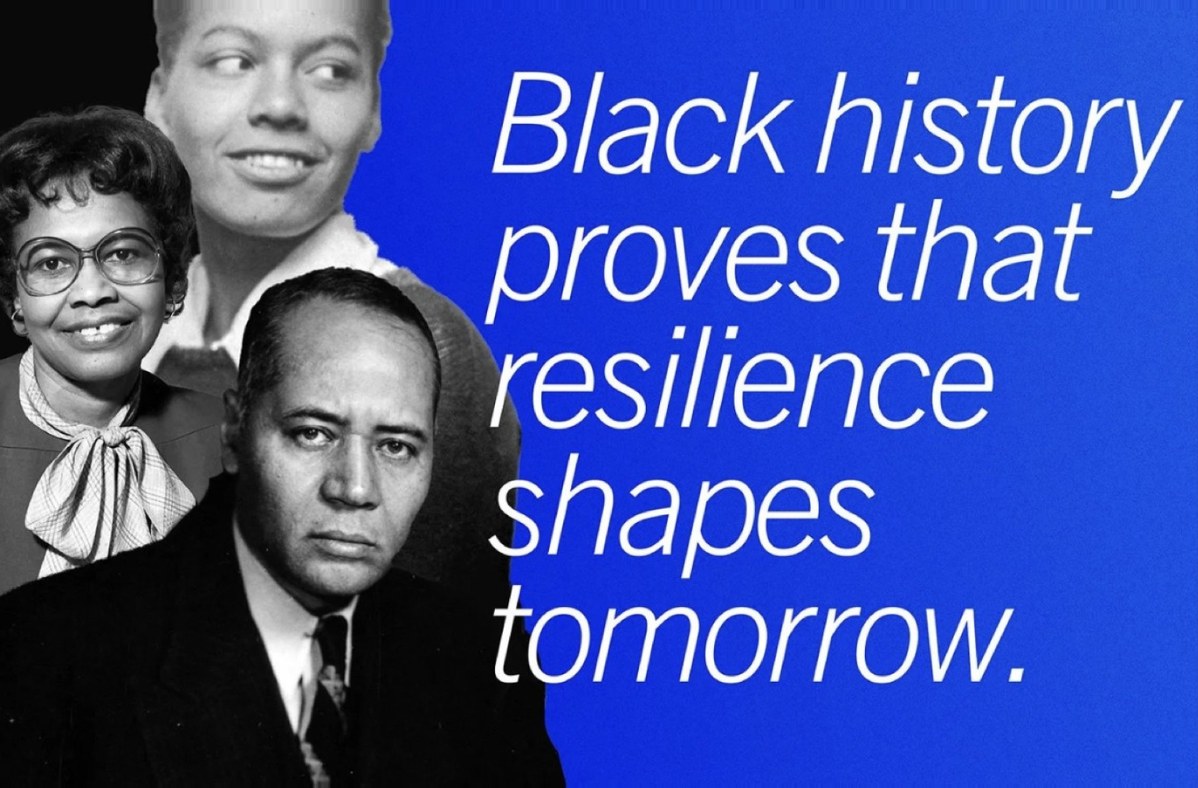
Black History Month is both mirror and compass. It reflects the tenacity of those who forged progress against oppressive systems—and directs us to lead with that same boldness today. Amid political tension, economic unpredictability, and backlash against equity, Black history isn’t just relevant. It’s a masterclass in courageous leadership and in  building legacies through chaos. 

The Urgency of Now: Lessons from the Past   

Black history thrives in resistance—a story of marginalized communities rewriting rules, not just surviving them. As businesses grapple with fractured workforces, threats to inclusion, and relentless technological change, leaders face a choice: retreat to familiarity, or channel the ingenuity of those who turned barriers into blueprints? 

This history is one of resilience and transformation. It’s about visionaries who saw beyond their circumstances to architect new realities. Today, employees are exhausted. Trust in institutions is crumbling. Leadership now demands cultivating cultures where people thrive amid uncertainty, not clinging to control. 

Ask yourself: 

·      What does your team need to feel  grounded yet agile ? 

·      How do you stay anchored in values when external noise escalates? 

·      Where do you find the courage to  innovate, not just iterate ? 


Disruption as a Force for Growth   

Black history’s pioneers didn’t just disrupt—they rebuilt. Consider  Charles Hamilton Houston , whose legal strategies dismantled Jim Crow and laid the groundwork for  Brown v. Board of Education . He didn’t just resist; he architected a better future. 

Pauli Murray redefined justice, crafting theories on race and gender that shaped civil rights and feminist movements decades later. Their work teaches us: transformative ideas often precede their time. 

Dr. Gladys West modeled the Earth’s shape, birthing GPS technology—a testament to resilience and innovation in spaces where Black women were excluded. These leaders didn’t just challenge systems; they built new ones. 


Building Resilience: A Framework for Forward Motion   

Disruption is inevitable. Progress is not. Lead through the storm with: 

1.  Rooted Purpose: Let your mission (like Houston’s dismantling of Jim Crow) guide decisions. What future are you building beyond today’s noise? 

2.  Adaptive Courage: Embrace Murray’s boldness. Encourage teams to test unconventional solutions— agility over rigidity . 

3.  Generational Vision: Follow Dr. West’s example. What can you create now that will reshape the next 20 years? 

The road won’t be smooth—but as Black history proves, generative and transformative change change never is. Resilience is a practice. Progress is a choice. What legacy will you build? 

Rethinking Meritocracy: Why True Meritocracy Depends on Culture and Climate

As we navigate an increasingly tumultuous, politicized conversation around the idea that advancing culture and climate is crucial for organizational success, we see the concept of diversity, equity, and inclusion (DEI) increasingly challenged. Opponents often emphasize other philosophies, like meritocracy.

Meritocracy is often viewed as the ultimate fair system—a place where people advance based on their talent, effort, and achievements. It’s the idea that anyone can succeed if they have the right skills and work hard enough.

However, this version of meritocracy is idealized—it doesn’t always reflect what people in organizations experience in reality. To build a true meritocracy, we first need to tackle the inequalities that exist within our social and organizational structures. This is where DEI becomes essential.

What’s wrong with the conventional view of meritocracy?

The traditional view of meritocracy assumes that everyone starts on equal footing, suggesting that success comes purely from individual effort and talent. However, this perspective ignores the systemic barriers many people face. Factors like socioeconomic background, race, gender, and access to quality education all play a significant role in determining where someone starts in life. Not everyone begins the race from the same starting line.

The usual concept of meritocracy often fails to recognize these disparities. Ignoring these structural inequities perpetuates a system that favors those who already have advantages, reinforcing existing power dynamics and privilege. This distorted version of meritocracy doesn’t truly reward talent; it rewards privilege disguised as merit.

Why culture and climate work is crucial for true meritocracy

To build a meritocracy that truly reflects an individual’s abilities and efforts, we need to pay attention to organizational culture and climate. This isn’t about giving certain groups an unfair advantage; it’s about recognizing the different challenges people face and providing the support needed to overcome those challenges.

Diversity, equity, and inclusion bring a wide range of perspectives, experiences, and talents to an organization or community, fostering innovation and creativity and helping organizations solve problems more effectively. The key is to acknowledge that people have different needs and to provide the necessary resources to ensure everyone has an equal shot at success—both for themselves and for the organization.

By weaving DEI into the fabric of organizations and society, we create a more equitable environment where people can truly be assessed based on their merit. Equitable hiring practices, for example, ensure job candidates are evaluated fairly and without bias. Training programs that focus on developing a diverse range of skills can help level the playing field, giving all employees a chance to advance based on their contributions and performance.

Creating an inclusive culture also breaks down barriers that often prevent marginalized groups from thriving. When everyone feels valued and included, they’re more likely to bring their best selves to work, which leads to better outcomes for both individuals and the organization.

In a real meritocracy, people succeed not because of their background or connections but because of their skills, efforts, and contributions – but this can only happen in an environment that actively works to eliminate bias, remove barriers, and provide equal opportunities for everyone.

Reimagining meritocracy for a fairer future

Reimagining meritocracy, with a focus on culture and climate, challenges us to rethink what fairness really means. It pushes us beyond the simplistic idea that merit alone determines success, encouraging us to recognize the complex mix of social, economic, and cultural factors that influence opportunities and outcomes.

Embracing these principles in our understanding of meritocracy doesn’t devalue hard work or talent. Instead, it elevates them by ensuring that these qualities are the true basis for success, not external advantages that have nothing to do with a person’s abilities or efforts. By leveling the playing field, we can create a more just and effective meritocratic system—one that genuinely reflects the best of what people have to offer.

DEI Doesn’t Work in Pieces

At DAS & Associates, we’ve observed a concerning trend in DEI (Diversity, Equity, and Inclusion) initiatives. Many companies are now focusing exclusively on “Inclusion.” While this might appear harmless, it undermines the broader mission of fostering genuinely diverse, equitable, and inclusive workplaces. This shift not only affects company culture but also impacts the richness and diversity of our broader American communities.

To understand the gravity of this issue, we must recognize that Diversity, Equity, and Inclusion are not just buzzwords; they’re the foundational pillars of advancing organizational culture and climate through the DEI framework. Diversity brings a spectrum of perspectives, experiences, and ideas, driving innovation and enriching our understanding. Equity ensures fairness, granting everyone access to the same opportunities, regardless of background. It demands we dismantle systemic barriers that hinder certain groups in the workplace and our society.  Inclusion fosters a culture where every individual feels valued, respected, and empowered to be their authentic selves.

When companies prioritize Inclusion while neglecting Diversity and Equity, they create an illusion of belonging that masks deep-seated inequalities. It’s akin to applying a band-aid to a severe wound – it may hide the problem temporarily, but it doesn’t heal the underlying issue. Inclusion without Diversity and Equity is an empty gesture that fails to challenge the status quo and disrupt existing power structures.

This approach is perilous because it fosters a misleading sense of progress, causing organizations to mistakenly believe that they have tackled inequality and discrimination merely by enhancing comfort. However, comfort alone is not the ultimate objective of DEI. The true goal is to cultivate workplaces where everyone has an equal opportunity to succeed, where diverse perspectives are actively encouraged, and where systemic barriers are persistently dismantled.

When organizations focus solely on inclusion, they risk reinforcing the very inequities they aim to address. Emphasizing inclusion without actively increasing diversity and ensuring equity upholds existing power dynamics and leaves the status quo unchallenged. This approach perpetuates the harmful expectation that marginalized groups must assimilate into the dominant culture, rather than having their unique perspectives genuinely valued and celebrated.

As passionate and invested practitioners in organizational culture and climate, we at DAS & Associates urge companies to resist the temptation to reframe DEI as mere Inclusion. Instead, we call for a robust reaffirmation of our commitment to all three pillars. Companies must take decisive action to increase diversity at every level, from entry-level positions to top leadership roles. They must boldly examine their policies, practices, and systems to identify and eliminate barriers to equity. Only then can true inclusion emerge – not as a superficial, feel-good measure, but as the natural result of a workplace where everyone has an equal opportunity to succeed and thrive.

In conclusion, the shift towards prioritizing Inclusion threatens to undermine the DEI movement’s core purpose. Diversity, Equity, and Inclusion are not interchangeable or optional – they are interdependent and indispensable pillars that must stand together, unwavering in their purpose. As we progress, let us reaffirm our unwavering commitment to all three elements of DEI. We must diligently strive to cultivate workplace cultures that are not only welcoming and comfortable but genuinely equitable and just for everyone. Let us rise together to uphold these principles, ensuring our collective efforts lead to a brighter, fairer future for all.

“Diversity is about all of us, and about us having to figure out how to walk through this world together.” — Jacqueline Woodson, American Writer

Is now the time for bold action, or will we settle for half-measures and empty promises? The choice is clear – let’s choose bold action.

Partner with DAS & Associates to advance your organization’s culture and climate holistically – with sustainable and transformative impact. Get in touch today to get started.

Get this resource

Enter your details and your PDF will start downloading right away.